
I Haven’t Filed My Taxes in Years. What Should I Do?
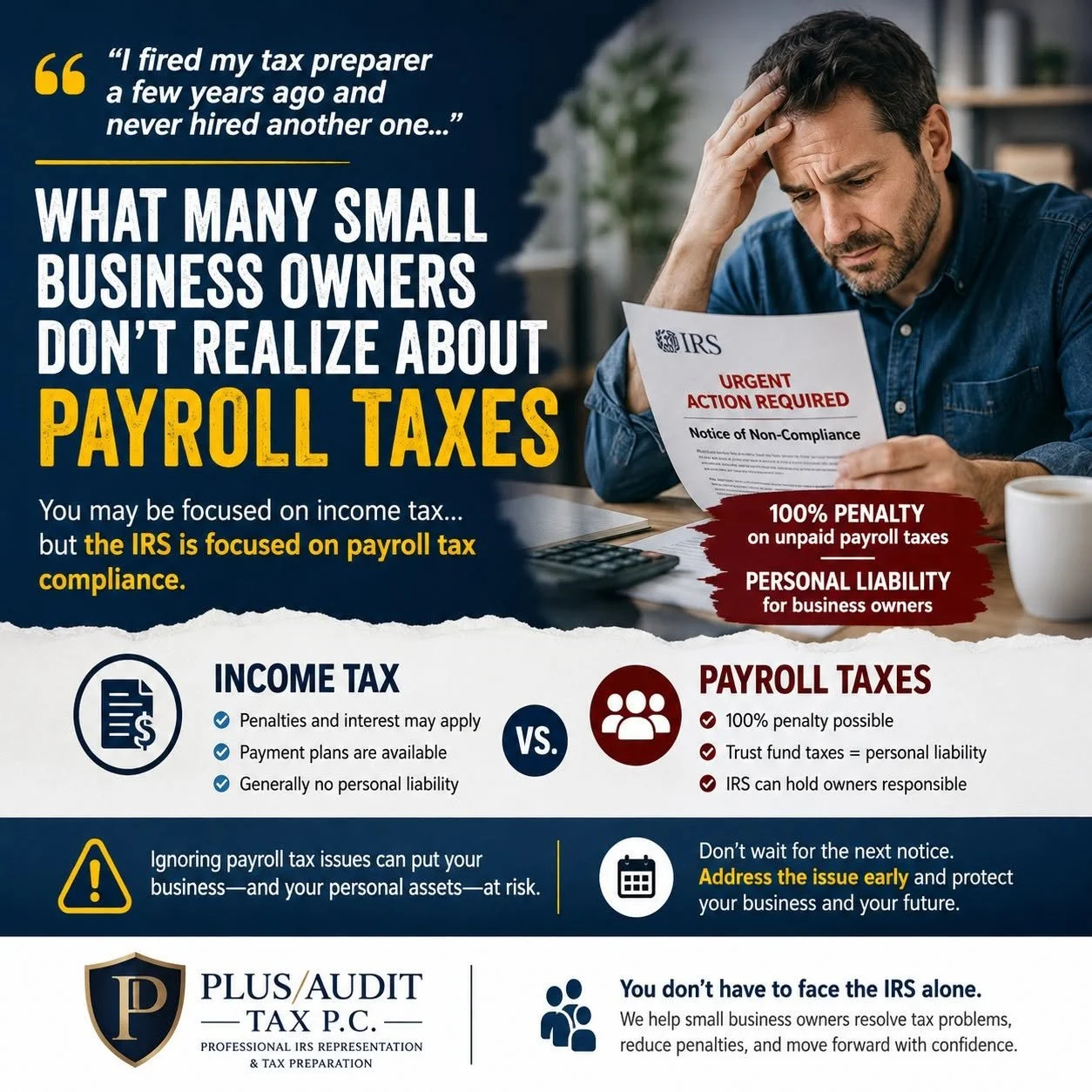
Over the last few months, I’ve spoken with several small business owners who were genuinely shocked when they received IRS notices regarding payroll tax non-compliance.
The story often starts the same way:
“My business was doing fine.”
“I stopped using my previous tax preparer.”
“I planned to find a new one later.”
“I thought everything would work itself out.”
Then reality arrives in the mailbox.
Whatever it is, the way you tell your story online can make all the difference.
Many business owners understand that failing to file an income tax return is a problem. What they often don’t realize is that payroll taxes are treated very differently by the IRS.
When payroll taxes are withheld from employees’ paychecks, those funds are considered trust fund taxes. The business is holding money that belongs to the government.
If payroll tax returns are not filed or payroll taxes are not paid, the IRS can assess the Trust Fund Recovery Penalty against responsible individuals, including owners, officers, and others who had authority over business finances.
In many cases, this means:
The business owes the tax.
AND
The owner may become personally liable for the trust fund portion of the liability.
The lesson is simple: Ignoring payroll tax compliance is often far more dangerous than ignoring income tax compliance.
If you have fallen behind on payroll filings (Forms 941, W-2 reporting, payroll tax deposits), it is usually better to address the issue early rather than wait for IRS enforcement actions with double priced bill.
