

RESOURSES
Practical guidance and insights to help you understand your tax situation and explore your options.
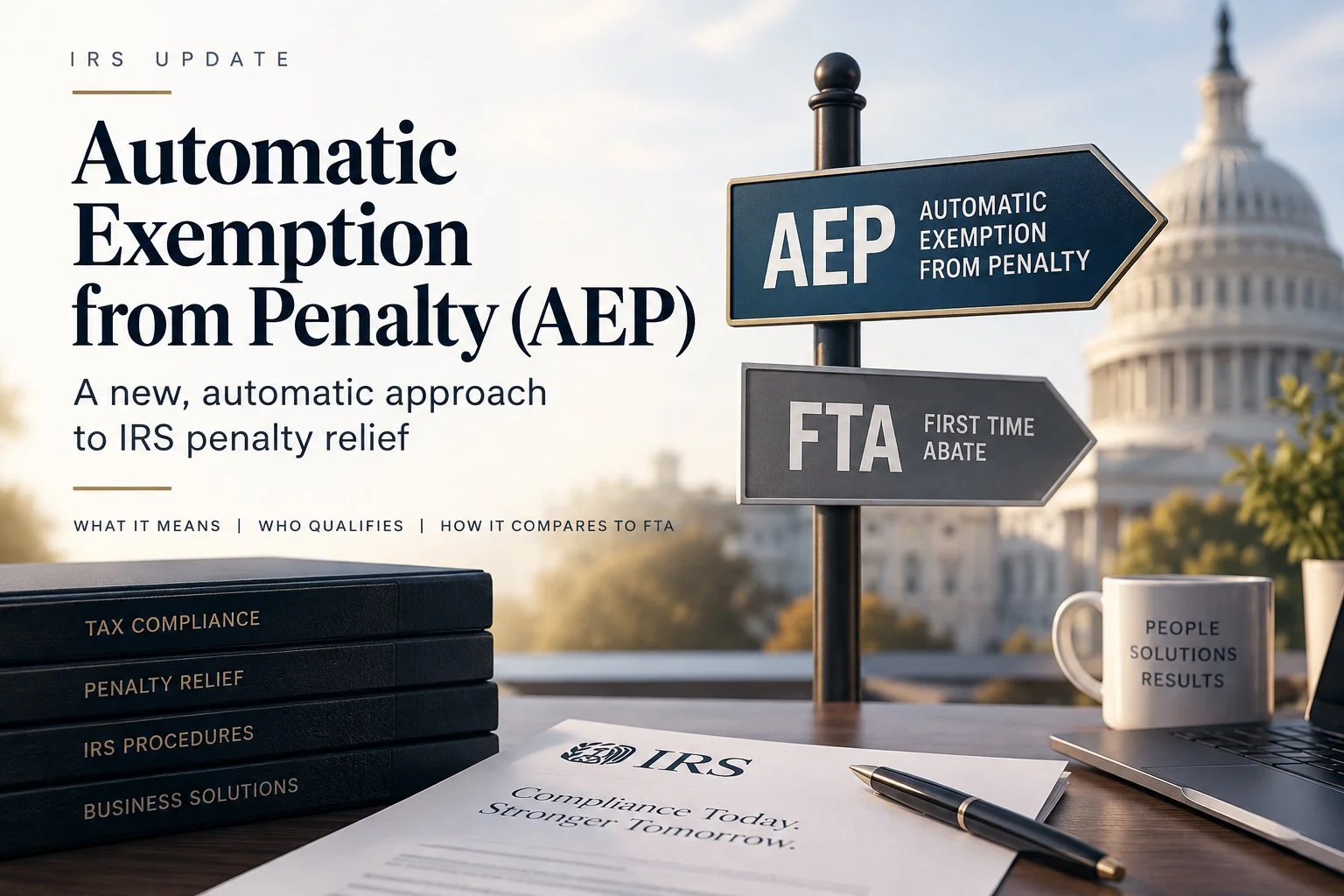
Automatic Exemption from Penalty (AEP): How the IRS’s New Automatic Penalty Relief Works
For many years, taxpayers with an otherwise good compliance history could rely on the IRS First Time Abate (FTA) program to obtain relief from certain failure-to-file, failure-to-pay, and failure-to-deposit penalties. The IRS is now changing that process through a new program called Automatic Exemption from Penalty (AEP).

Your IRS Installment Agreement Is Approved. Now What?
An IRS Installment Agreement can provide much-needed breathing room when you cannot pay your tax debt in full. But an Installment Agreement is not something that should simply be placed on autopilot and forgotten. The agreement resolves how an existing tax debt will be paid. It does not eliminate the taxpayer’s responsibility to remain current with future tax obligations.

Why can’t my tax professional contact the IRS immediately?
Before an Enrolled Agent (EA), CPA, or attorney can discuss your tax account with the IRS on your behalf, the IRS must first process Power of Attorney. This authorization allows us to communicate directly with the IRS regarding your case.
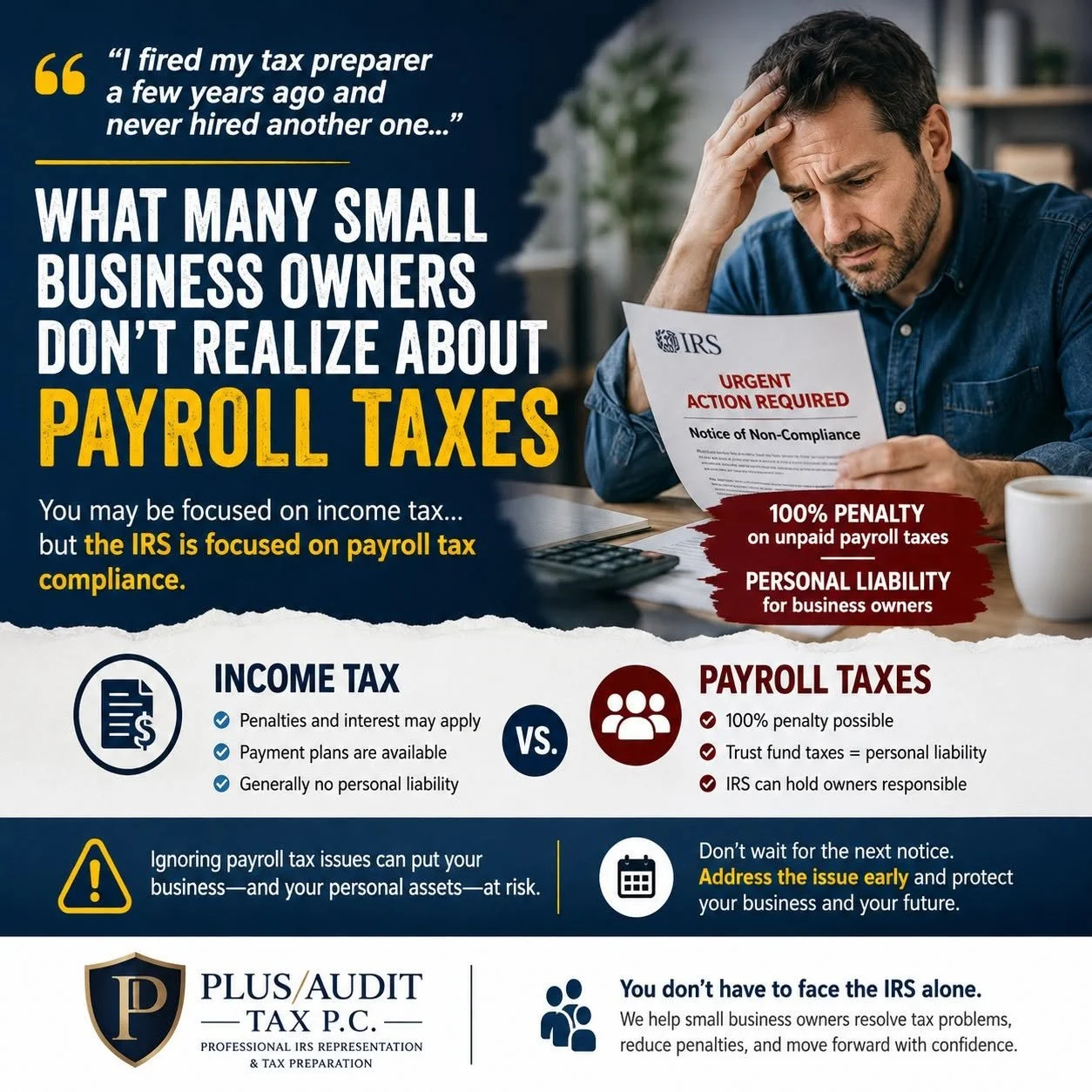
Why Payroll Tax Problems Can Become Personal?
Many business owners understand that failing to file an income tax return is a problem. What they often don’t realize is that payroll taxes are treated very differently by the IRS.
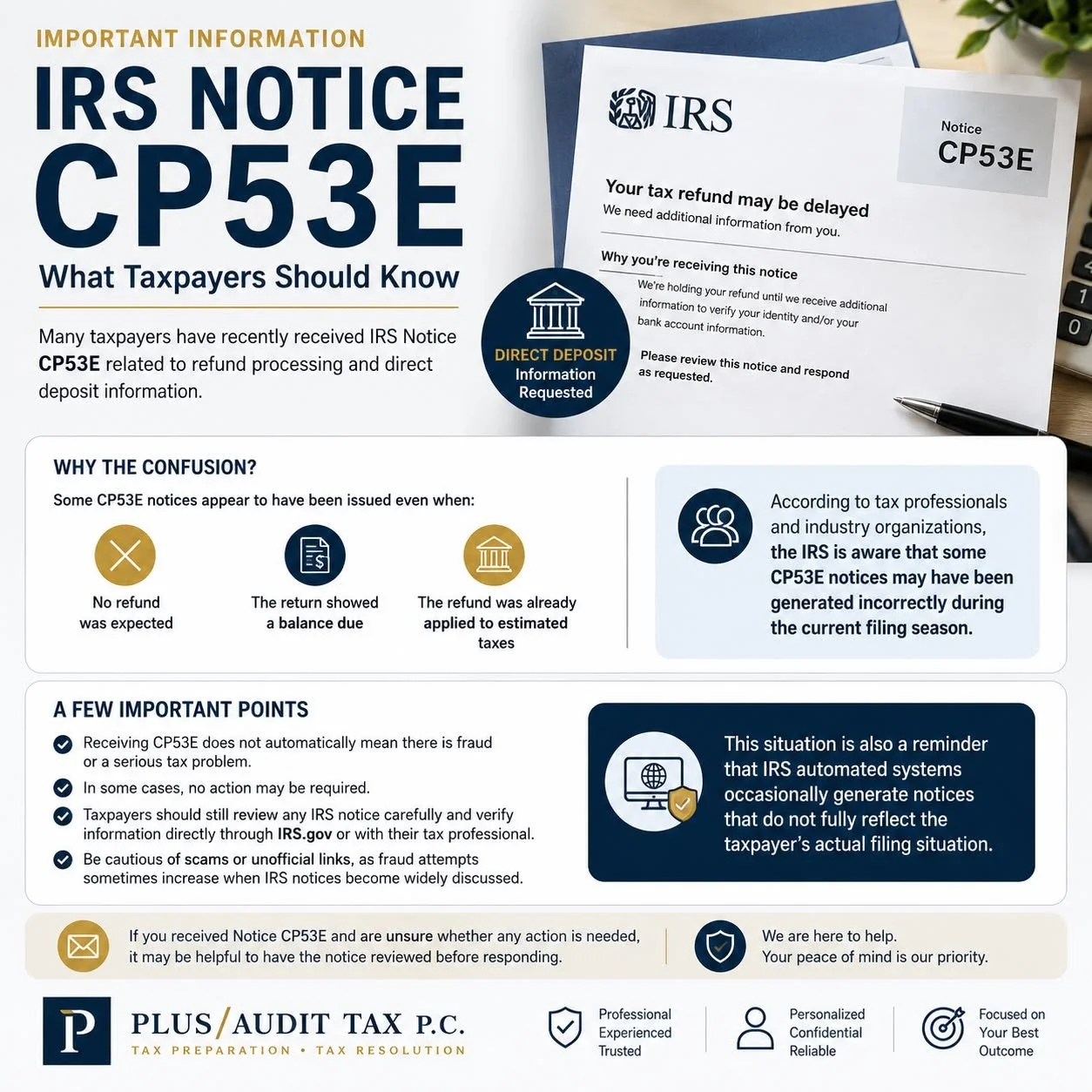
IRS Notice CP53E: What Taxpayers Need to Know
Recently, many taxpayers across the country have started receiving IRS Notice CP53E related to refund processing and direct deposit information.
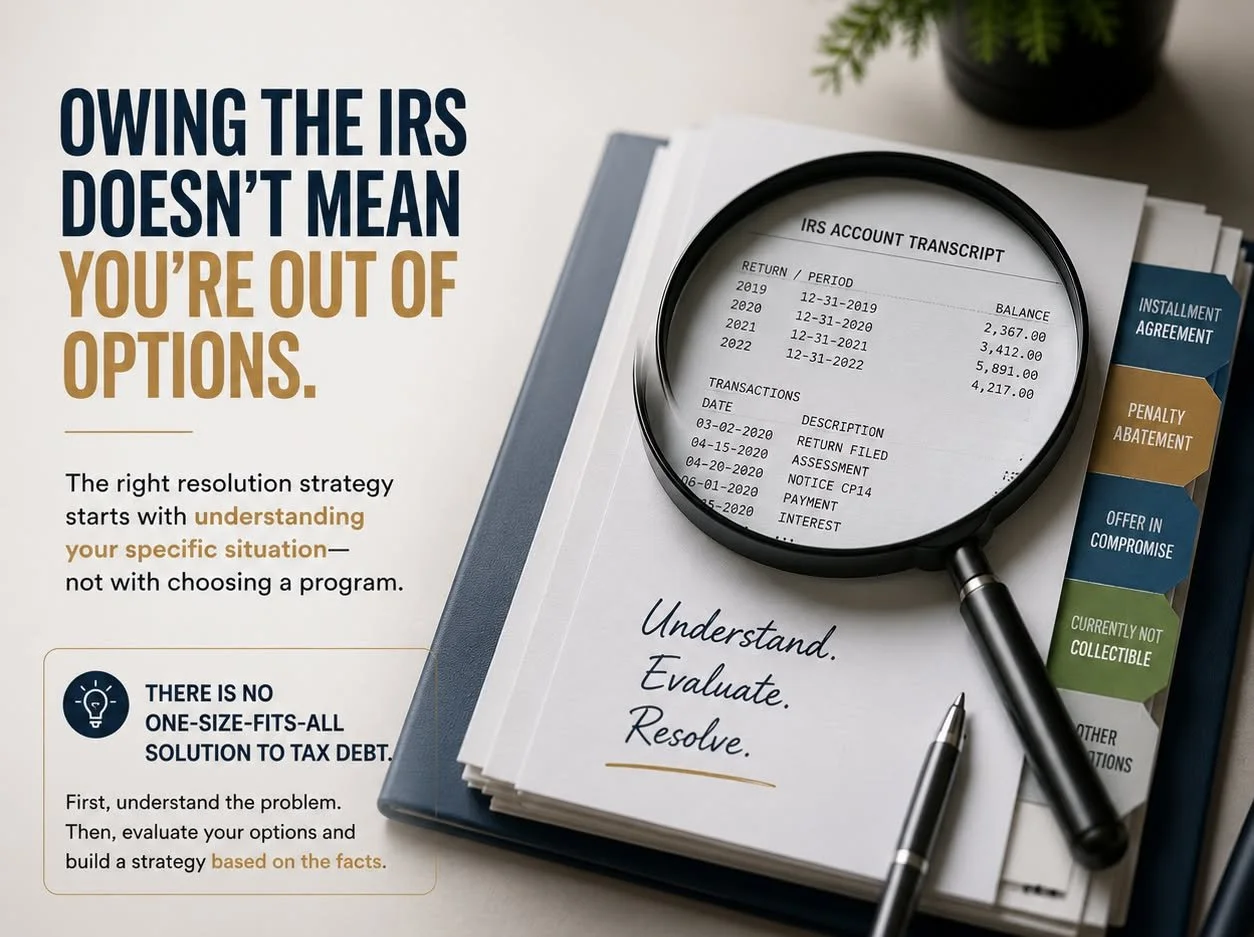
Does Owing the IRS Mean You Need an Offer in Compromise?
An Offer in Compromise can be a valuable resolution option, but it isn’t the right solution for every taxpayer.

Why S Corporation Owners Can’t Simply Take Distributions Instead of Payroll
If you actively work in your S-Corp, the IRS requires you to pay yourself reasonable compensation before taking distributions. This is not optional.
Most Common Tax Problems
-
Unfiled Returns
-
Federal Tax Lien
-
Levies and Garnishments
-
Seizures of Assets
-
Payroll Tax Problems