
Why S Corporation Owners Can’t Simply Take Distributions Instead of Payroll
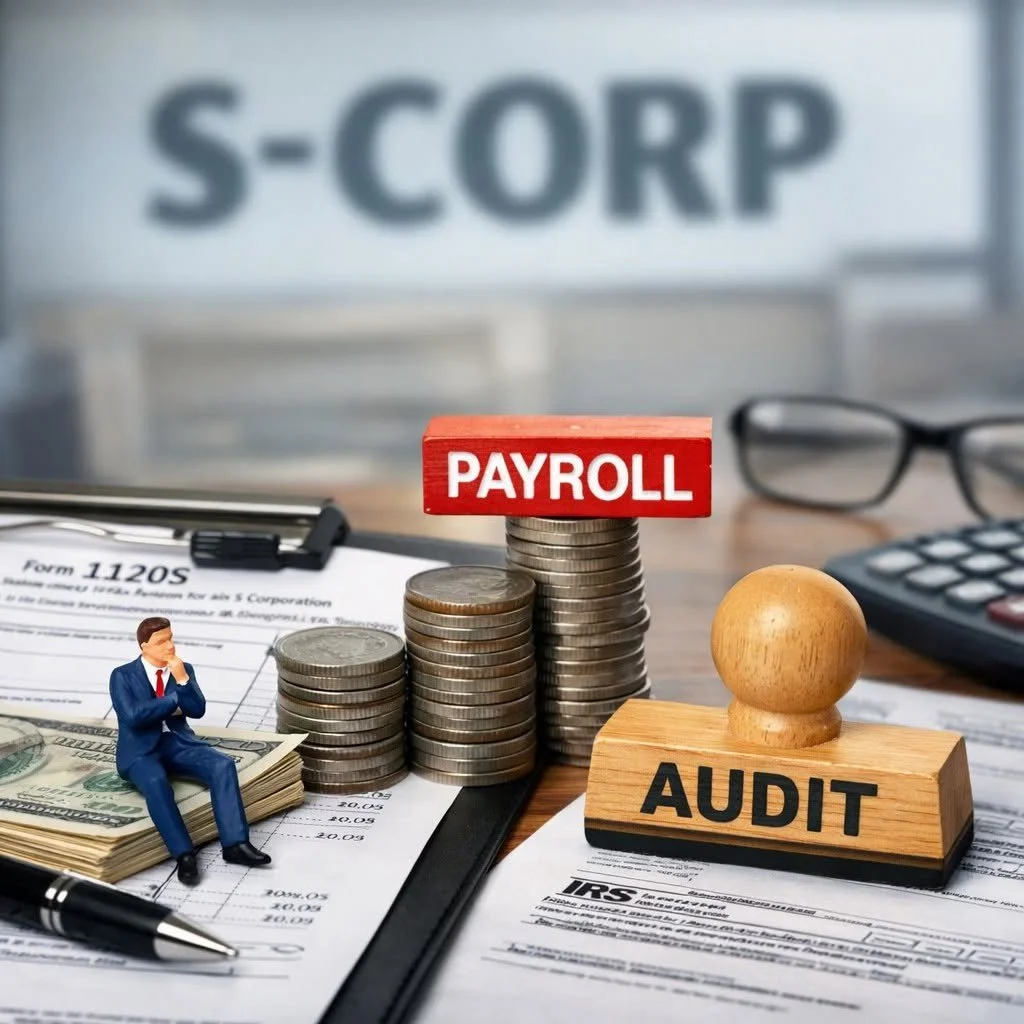
One of the most common misconceptions among new S corporation owners is that once the business elects S corporation status, they no longer need to pay themselves through payroll. Instead, they believe they can simply take shareholder distributions and avoid payroll taxes altogether.
While that approach may appear attractive, it is often inconsistent with IRS requirements. The issue centers on a concept known as reasonable compensation.
When an S corporation shareholder also performs substantial services for the business, the IRS generally expects that individual to receive reasonable compensation for the work performed before receiving non-wage distributions. The purpose of this rule is straightforward: wages are subject to employment taxes, while shareholder distributions generally are not.
Without this requirement, business owners could potentially characterize all business earnings as distributions and avoid payroll taxes entirely. The IRS has consistently taken the position that this is not the intended purpose of the S corporation tax structure.
The challenge, of course, is determining what “reasonable” actually means. The Internal Revenue Code does not establish a fixed salary or percentage that every S corporation owner must pay themselves. Instead, reasonable compensation depends on the facts and circumstances of each business. Among the factors the IRS may consider are the nature of the services performed, the owner’s responsibilities, the time devoted to the business, industry compensation levels, the company’s financial performance, and what similar businesses pay employees performing comparable work.
This means that there is no universal formula. A consulting firm, a construction contractor, an IT company, and a medical practice may each arrive at different conclusions based on their specific facts. Problems often arise when an owner actively manages the business, generates its income, and performs the primary revenue-producing work, yet reports little or no wages while taking substantial shareholder distributions.
If the IRS examines the return and concludes that reasonable compensation was not paid, it may reclassify some or all of those distributions as wages. That adjustment can result in additional employment taxes, penalties, and interest. In some situations involving unpaid payroll tax obligations, the IRS may also consider other collection remedies available under the law, depending on the facts of the case.
This does not mean that every S corporation owner should pay themselves a high salary. In fact, one of the legitimate advantages of an S corporation is the opportunity to reduce self-employment or payroll taxes through a reasonable balance between wages and shareholder distributions. The key word, however, is reasonable.
Finding that balance requires more than selecting a number that minimizes taxes. It requires considering the facts of the business, documenting the rationale, and ensuring that the compensation can be supported if questioned by the IRS. For that reason, payroll should not be viewed merely as an administrative requirement. It is an important part of maintaining compliance with the rules governing S corporations.
Many business owners understandably focus on reducing taxes today. However, tax planning should also consider the possibility of future IRS examination. A reporting position that produces immediate tax savings may become far more expensive if it cannot be supported later.
When properly structured, an S corporation can provide meaningful tax benefits while remaining fully compliant with IRS requirements. Establishing appropriate payroll from the beginning is often one of the most important steps toward achieving both objectives.
